

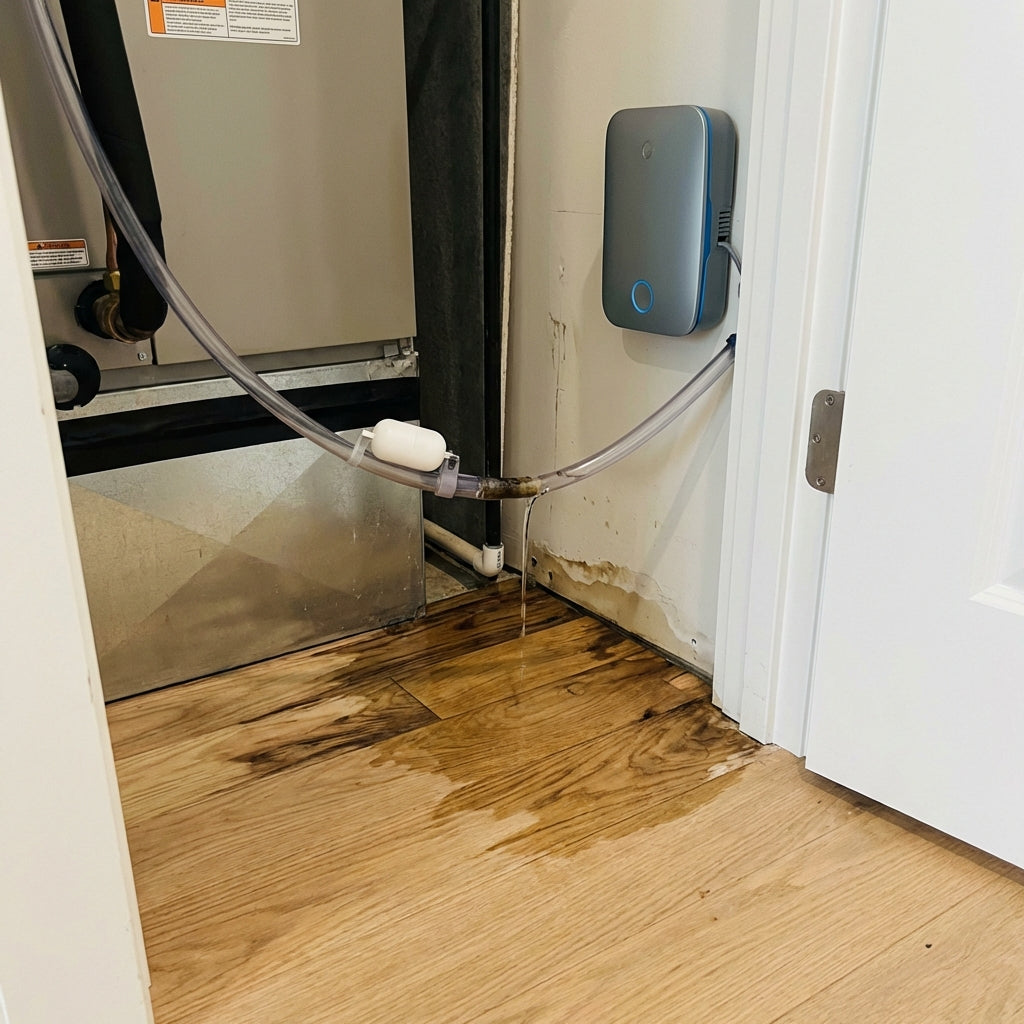
The Hidden Risk of Relying on Float Switches Alone
Most homeowners don't think about their air conditioning system's drain line until something goes wrong. That's when a $200 component failure becomes a $5,000 water damage emergency. We've spent years understanding why this happens, and the answer often points to a single, passive device: the float switch. It's time to explain why float switches aren't enough and why we built our automated system to do what they simply cannot.
Float switches are standard equipment on many HVAC systems. They sit inside the condensate drain pan and do one job: they trip when water rises above a safe level, triggering an alarm or shutting down your system. Sounds logical, right? The problem is that by the time a float switch activates, water has already accumulated inside your air handler. That water has been sitting there, creating the exact conditions where problems develop.
Your A/C's evaporator coil sits directly above the drain pan. During the cooling season, condensation constantly drips from that coil into the pan and down the drain line. If your drain line clogs, water backs up into the pan. The float switch waits. It waits until water reaches a specific level, then it alerts you or stops your system. By that point, you're already facing potential mold growth, corrosion, and component damage.
Float switches are reactive devices in a system that desperately needs prevention. They're also prone to failure themselves. Mineral deposits, sediment, and sticking mechanisms mean your float switch may not work when you need it most.
What to do next: Check whether your system includes a float switch and ask your HVAC technician whether it's been tested recently. Many homeowners discover their float switch is stuck or non-functional only after water damage occurs.
How Float Switches React Instead of Prevent
Consider this scenario: It's mid-July, your home is 95 degrees, and you're relying on your A/C to run. Your drain line has a partial clog formed by zooglea (biofilm) that's been accumulating slowly over weeks. Your float switch sits dormant because the backup hasn't reached its trigger point yet. Meanwhile, that biofilm continues to thicken, your cooling efficiency drops, and your system works harder to maintain temperature.
This is the core limitation of float switches. They cannot prevent clogs from forming. They cannot stop the biological growth that clogs happen. They cannot clean your drain line. They only catch problems after they've already begun.
Float switches also create a binary outcome: alarm or shutdown. When a float switch triggers, your system stops cooling to prevent water damage. You're left without air conditioning in the heat, facing an emergency service call, and dealing with potential property damage before a technician arrives. That's not protection; that's damage control.
We designed our approach around a different principle: stop problems before they start. Our automated system works continuously, regardless of water levels, ensuring your drain line stays clear every single day.
Understanding the Cost of Water Damage and Emergency Repairs
The financial impact of a clogged drain line extends far beyond the $150 service call to clear it. Water backing up into your air handler can damage the evaporator coil, requiring replacement costs between $800 and $2,500. If water seeps into your home's structure, drywall, flooring, and insulation may need replacement, potentially reaching $10,000 or more.
Mold growth follows water damage. Remediating mold is expensive and time-consuming, often requiring professional contractors and temporary relocation during treatment. Health impacts can develop for household members with respiratory sensitivities.

Emergency HVAC service calls come with premium pricing. A technician dispatched on a weekend or holiday charges significantly more than scheduled maintenance. When your system fails during peak cooling season in the middle of summer, you're often paying whatever the service company quotes because you need immediate relief.
Many homeowners also face reduced system efficiency before they realize there's a problem. A partially clogged drain line forces your A/C to work longer to reach your set temperature, increasing energy costs by 15 to 20 percent month after month.
These costs compound quickly. What prevention costs up front prevents expenses that are exponentially higher later.
Our Approach: Continuous Prevention Over Emergency Response
We built iFLO with one goal: eliminate drain line clogs before they happen. Our automated system releases a science-backed, non-corrosive solution into your drain line continuously, designed to prevent the buildup of biofilm and algae that cause clogs.
Unlike float switches, our system doesn't wait for problems. It works 24/7, every single day, whether your A/C is running or not. The solution we use is safe for all standard drain line materials and won't damage pipes, fittings, or your septic system. It's pH-balanced and designed to keep your drain line clear and flowing freely.
Our approach shifts your mindset from "react when something breaks" to "prevent problems from developing." This preventive philosophy saves you time, money, and stress. You're not managing emergencies; you're maintaining a system that functions reliably year-round.
How Our Automated System Protects Your Home 24/7
Our system operates through intelligent automation. A cartridge containing our solution installs directly into your drain line. Over days and weeks, it releases a consistent dose of our proven cleaning solution. You don't adjust settings, refill bottles, or monitor anything manually. The system does the work for you.
Here's what this means in practice:
- Biofilm and zooglea cannot accumulate because they're continuously exposed to our preventive solution
- Your drain line remains clear, water flows freely, and your evaporator coil stays dry
- Backup conditions never develop, so your float switch (if you have one) never needs to activate
- Your A/C efficiency stays at optimal levels because there's no obstruction forcing the system to work harder
The cartridge lasts three to six months, depending on your system's usage. When it's time to replace it, we send you a reminder, you swap in a new cartridge, and protection resumes. It's straightforward, low-maintenance, and designed for homeowners who want solutions that simply work.
This continuous protection is what float switches cannot provide. While they sit passively waiting for a crisis, our system actively prevents crises from occurring.
Smart Monitoring Gives You Complete Control and Peace of Mind

We integrated smart sensors into our system because we believe you should know what's happening with your home. Our app sends you real-time alerts about your drain line health, cartridge status, and system performance.
If something unusual happens, you're notified immediately, not after damage has occurred. You can monitor trends over time and see exactly how our solution is keeping your drain line clear. This transparency builds confidence and eliminates the guesswork about whether your drain line is healthy.
You also receive cartridge replacement reminders, so you never accidentally run out of protection. Scheduled maintenance becomes predictable and simple rather than surprising and stressful.
This peace of mind is valuable. You're investing in protection you can actually see and verify, not hoping a passive float switch works when you're not home.
Installation That Takes Minutes, Not Hours
Many homeowners hesitate about upgrading their HVAC system because they expect installation to be messy, time-consuming, and disruptive. Our system is different. We designed it for 15-minute tool-free installation. You don't need a technician, special equipment, or knowledge of HVAC systems.
The installation process is straightforward:
- Locate your condensate drain line (usually a small PVC pipe running from your air handler)
- Turn off your A/C system
- Position our cartridge into the drain line connection point
- Turn your system back on
That's it. Within 15 minutes, continuous protection is active.
We've worked hard to remove barriers to protection. Cost shouldn't be high, installation shouldn't be complicated, and maintenance shouldn't demand your time. Our system respects all three principles.
Learn how to install our system by visiting our product page, or contact us if you have questions specific to your setup.
Why Our Solution Saves You Money Long-Term
The math is compelling. Our system costs significantly less than a single emergency service call plus water damage repair. Over three to five years, the savings are substantial.
Consider the typical homeowner's experience: no prevention for years, then a clog, then an emergency call (average $400 to $600), then potential water damage (average $2,000 to $5,000 or higher). Compare that to our system, which costs much less and prevents those emergencies entirely.

You also reduce ongoing energy costs. A clear drain line means optimal system efficiency, which lowers your cooling bills. During peak summer months, this difference is noticeable.
Insurance may also recognize preventive measures positively. Some policies reward homeowners who take steps to prevent water damage and property loss.
The long-term financial argument is clear: prevention costs far less than emergency response.
Real Protection Against Mold, Odors, and Component Damage
Clogged drain lines create stagnant water, which becomes a breeding ground for mold, algae, and bacteria. This causes musty odors that circulate through your home whenever your A/C runs. These smells are unpleasant and indicate an environment where mold is developing.
Mold spores affect air quality inside your home. They aggravate allergies and respiratory conditions, particularly in children and older adults. Beyond health concerns, mold remediation is expensive and disruptive.
Standing water also accelerates corrosion of metal components inside your air handler. Coils, connections, and hardware deteriorate faster in wet conditions, shortening equipment lifespan and increasing repair frequency.
Our continuous prevention addresses all three issues at their source. By keeping your drain line clear and flowing, we eliminate the stagnant conditions where mold grows. Your air stays fresher, your components stay protected, and your system lasts longer.
Making the Switch to Preventive Maintenance
The HVAC industry has relied on passive float switches for decades because they were the only available option. Now you have a choice. You can continue hoping your float switch works, or you can invest in a system that actively prevents problems.
We've seen thousands of homeowners in warm climates realize the same thing: prevention is simpler, cheaper, and far less stressful than emergency response. The question isn't whether you can afford preventive protection; it's whether you can afford not to have it.
Your drain line deserves better than a passive safety net. Your home deserves continuous protection. Your peace of mind deserves certainty.
Schedule a consultation with us to discuss your specific situation, or explore how our automated system works with your current HVAC setup. We're here to answer questions and help you make the switch to preventive maintenance today.
For further reading: Automated drain line cleaning.


