

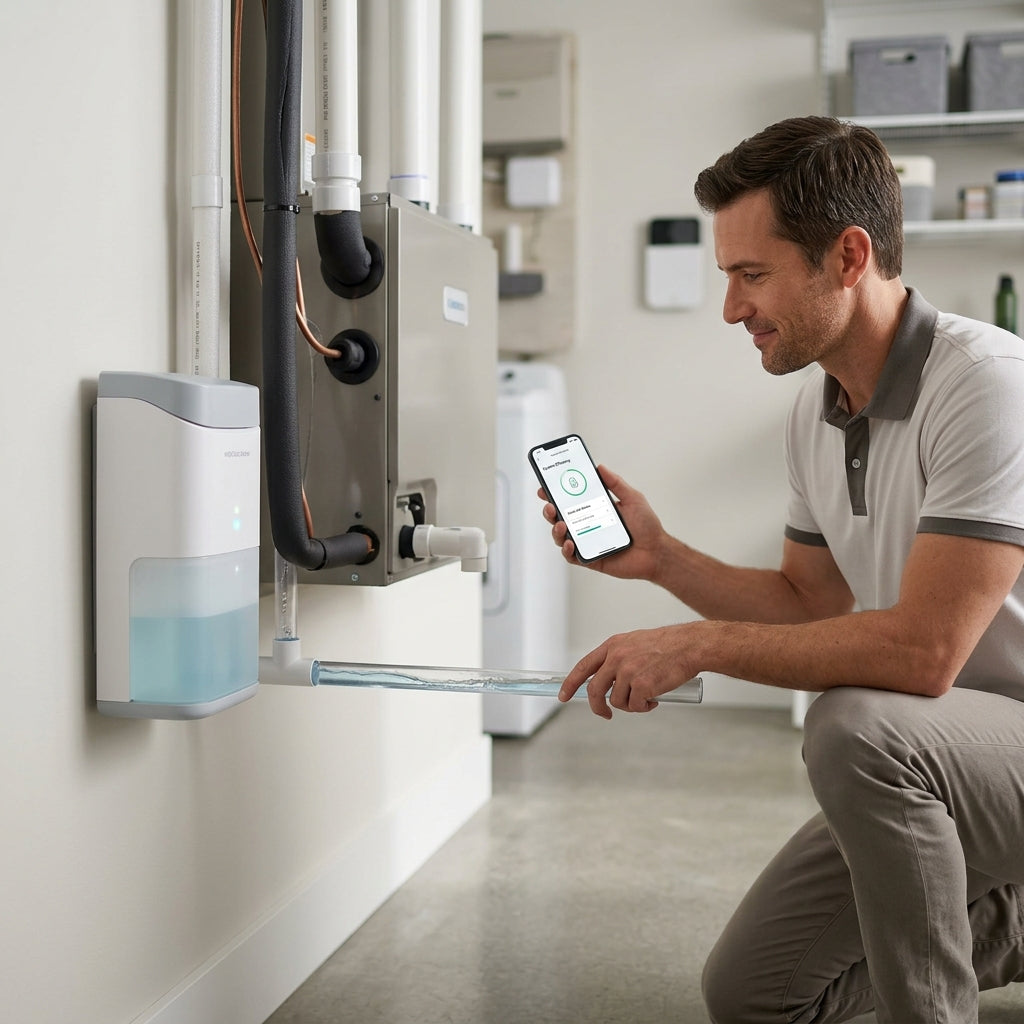
How AC Drain Line Clogs Waste Energy and Increase Monthly Bills
Your air conditioning system runs hardest during warm months, and every efficiency gain directly lowers your cooling bills. Most homeowners focus on thermostat settings and filter changes, but miss a critical energy drain happening inside their equipment. We've designed a solution that addresses the root cause of rising cooling costs: clogged drain lines that force your A/C to work overtime.
When your air conditioning system cools your home, it removes moisture from the air. That condensation flows through the drain line—a small pipe that carries water away from your evaporator coil. If this drain line becomes blocked, water backs up and pools around your cooling coil, reducing its ability to absorb heat efficiently.
Think of it like this: a clogged drain line forces your A/C to run longer cycles to reach your target temperature. Longer runtime equals higher energy consumption and bigger monthly utility bills. Studies show homeowners with partially blocked drain lines see 5-15% increases in cooling costs during peak seasons.
Biofilm, dirt, and mineral deposits accumulate gradually in drain lines, especially in warm, humid climates. By the time you notice a problem—wet spots, musty odors, or higher bills—significant energy waste has already occurred. The solution isn't waiting for annual maintenance visits. It's preventing clogs before they compromise your system's efficiency.
Why Traditional HVAC Maintenance Falls Short for Cost-Conscious Homeowners
Annual or semi-annual HVAC service calls catch some problems, but they miss the ongoing threat of drain line buildup. Technicians typically perform drain line cleaning only when homeowners report standing water or backup issues. By that point, weeks or months of wasted energy have already accumulated.
Seasonal maintenance schedules also don't align with how drain lines actually clog. Buildup happens continuously in warm climates, not just at seasonal transitions. A spring cleaning visit might clear a blockage, but by July, new growth has already begun restricting water flow.
Traditional approaches also depend on you remembering to schedule appointments and recognizing warning signs. If your home is naturally quiet, you might miss early indicators like slightly longer cooling cycles or subtle odors. Cost-conscious homeowners need a system that works automatically, without requiring constant attention or guesswork about when service is needed.
The Hidden Energy Drain: Understanding Evaporator Coil Buildup
Your evaporator coil sits inside your air handler and is where the cooling actually happens. As warm air from your home passes over this cold coil, heat is absorbed and moisture condenses. That moisture should drain away smoothly, but when the drain line backs up, water collects on and around the coil.
This standing water creates ideal conditions for microbial growth, including zooglea—a slimy biofilm that multiplies rapidly in warm, moist environments. As zooglea accumulates, it restricts water flow further, creating a self-reinforcing cycle of reduced efficiency.
When water pools on your evaporator coil, the coil's heat absorption capacity drops. Your A/C compressor must run longer to remove the same amount of heat from your home. Extended runtime means higher electricity consumption, lower seasonal energy efficiency ratings, and reduced lifespan of expensive components.
The relationship is direct: cleaner coils mean better heat transfer, shorter cooling cycles, and lower monthly bills. A coil free from bacterial growth and standing water can operate at peak efficiency, cooling your home faster with less energy.
Our Automated Solution Prevents Costly Clogs and Optimizes Efficiency

We've created the industry's first automated A/C drain line cleaner that works 24/7 to prevent the buildup that wastes energy. Our system uses a science-backed, non-corrosive solution that actively prevents zooglea and biofilm from forming inside your drain line, rather than waiting to clear clogs after they form.
Unlike traditional drain cleaning, which requires a technician's visit and temporary disruption to your system, our solution works continuously and automatically. It helps reduce the likelihood of standing water, slow drainage, and the microbial growth that compromises your cooling efficiency.
The key difference: we prevent the problem instead of reacting to it. This means your evaporator coil stays cleaner longer, your system runs more efficiently, and your energy costs stay lower month after month. No emergency calls, no surprise water damage, no seasonal surprises on your utility bill.
How Smart Sensor Monitoring Tracks Your Energy Performance
We've integrated intelligent sensors into our system that monitor drain line health and alert you to any performance changes. These sensors track water flow patterns, moisture levels, and system pressure—providing early warning of potential issues before they impact efficiency.
Smart monitoring does more than prevent problems. It gives you visibility into how well your A/C is actually performing. You'll receive real-time alerts if drainage begins to slow or if system pressure indicates emerging buildup. This data lets you take action immediately, keeping your system at peak efficiency.
Our smart sensors also integrate with your home's wireless network, so you can check your A/C's drain line health from your phone. No guessing, no waiting for scheduled maintenance visits. You know exactly when your system is optimized and when attention might be needed.
This proactive approach helps reduce energy waste from the start. Instead of discovering efficiency problems weeks into a billing cycle, you address them within hours of detection. Over a cooling season, this early detection advantage compounds into measurable savings.
Installation and Immediate Benefits Within 15 Minutes
We designed our system for quick installation so you can start preventing clogs today. The tool-free setup takes about 15 minutes and requires no special equipment or HVAC expertise. You simply attach our cartridge to your existing drain line—no cutting pipes, no modifications to your system, no downtime.
Here's what the installation process looks like:
- Turn off your A/C system.
- Locate your drain line exit near your outdoor unit or inside your home.
- Attach our cartridge using the simple, tool-free connector.
- Turn your system back on.
Within the first few hours, you'll notice your system running slightly more smoothly as our solution begins conditioning the drain line. Within the first week, as the solution prevents biofilm growth, your cooling cycles will stabilize at optimal length. Many homeowners report feeling cooler air circulation within days as their evaporator coil operates more efficiently.
The immediate benefit goes beyond temperature control. You gain peace of mind knowing that drain line clogs are being actively prevented. No more wondering if a backup is starting or if your system is struggling.
Real Savings: What Homeowners Can Expect on Cooling Costs
Energy savings from our system vary based on climate, system age, and initial drain line condition, but homeowners typically see measurable reductions within the first billing cycle.

If your drain line had partial blockage, you might see 8-12% reduction in cooling costs. If your drain line was relatively clean to begin with, the savings trend upward over time as biofilm growth is actively prevented. Over a full cooling season in warm climates, cumulative savings often exceed $150-300 per household.
These savings compound across multiple years. Year one might show 10% reduction. Year two shows 12% reduction as the preventive benefits accumulate. Year three and beyond, your system maintains peak efficiency that would have degraded without active drain line protection.
Beyond dollar savings, consider avoided costs: professional drain line cleaning ($150-300 per visit), emergency water damage repairs ($2,000-5,000), mold remediation ($1,000-3,000), and early component replacement due to corrosion. Our preventive approach helps you sidestep all of these expenses.
Choosing Between 3-Month and 6-Month Protection Plans
We offer two protection plans to fit your needs. The 3-month cartridge is ideal if you want frequent cartridge changes and maximum confidence in continuous solution freshness. The 6-month cartridge provides extended coverage for homeowners who prefer less frequent maintenance intervals.
Both cartridges use our same science-backed, non-corrosive solution. The difference is volume and duration. The 3-month option means four cartridge changes per year. The 6-month option means two changes per year.
Choose 3-month if:
- You want maximum reassurance and prefer frequent cartridge changes.
- You live in an extremely humid climate with high microbial growth risk.
- You want to monitor freshness more frequently.
Choose 6-month if:
- You prefer minimal maintenance intervals.
- Your budget favors longer protection cycles.
- You value consistency and fewer cartridge changes annually.
Both plans deliver the same active prevention benefit. The choice depends on your comfort level with maintenance frequency and budget preference. We recommend starting with the plan that feels right for your household, knowing you can adjust next season if needed.
Integrating Our System Into Your Smart Home Setup
Our drain line cleaner connects to your home's smart home network, giving you central control and monitoring through your existing smart home platform. If you already use a smart thermostat or home automation system, our device integrates seamlessly, sending alerts and status updates to the same app or dashboard you already use daily.
Integration benefits include:
- Drain line health notifications sent directly to your phone.
- Historical data showing system performance trends over months and seasons.
- Alerts that trigger only when meaningful changes are detected.
- Optional automation that can link drain monitoring to your thermostat settings.
You don't need advanced tech skills to set this up. The pairing process takes minutes, and our support team can walk you through it if needed. Once connected, the system operates invisibly until it detects something worth reporting.

This integration transforms drain line maintenance from something you have to remember into something your smart home automatically manages and reports on. You stay informed without extra effort.
Seasonal Maintenance Tips to Maximize Efficiency Year-Round
Beyond our automated solution, a few seasonal practices help your A/C maintain peak efficiency. Before cooling season begins (typically March or April in warm climates), confirm your thermostat is calibrated correctly and your filter is clean. Our system handles drain line prevention, but clean filters and accurate temperature settings multiply those efficiency gains.
During peak cooling season (May through September), check your outdoor unit monthly for debris. Leaves, dust, and grass clippings reduce airflow around the condenser. A quick clear-off takes five minutes and helps preserve the efficiency we're protecting through drain line maintenance.
As cooling season winds down (October), resist the urge to turn off our system immediately. Warm months can linger, and your A/C might still run occasionally. Keep our cartridge active until late fall to ensure consistent protection through the last warm spells.
In winter, if you live in a climate that gets cold, you can pause our system during non-cooling months, though some warm-climate homeowners run it year-round. Reactivate it as spring temperatures rise. Our cartridge system makes this easy—just swap in a fresh cartridge when you're ready to resume active protection.
Why Prevention Beats Repair When It Comes to Energy Costs
Every dollar spent on preventing drain line clogs saves three to five dollars in avoided repairs, efficiency losses, and water damage. This isn't just intuition—it's the math of HVAC systems. An ounce of prevention truly costs less than a pound of cure.
Repair scenarios look like this: First, you notice higher bills or wet spots. Then you call a technician ($100-150 service call). The technician finds a clogged drain line and clears it ($150-300). You might also need evaporator coil cleaning ($200-400) if biofilm has accumulated. If water damage has spread, add $2,000-5,000 for remediation.
That's easily $2,500-5,900 in total expenses from a single clogged drain event. Our system costs far less and works continuously to ensure that event never happens.
Beyond cost, prevention protects your peace of mind. You're not stressed about potential water damage, rising bills, or unexpected repairs. You know your drain line is being actively managed. That assurance is worth something too, though it's harder to quantify in dollar terms.
Getting Started: Schedule Your iFLO Installation Today
Ready to protect your A/C's efficiency and lower your monthly cooling costs? The first step is learning how to install our system or scheduling a consultation with our team. Installation takes just 15 minutes, and you'll start seeing efficiency benefits within days.
Visit our product page to explore the 3-month and 6-month protection plans, see detailed installation instructions, and read real reviews from homeowners who've already reduced their cooling costs. Our team is here to answer questions and help you choose the right plan for your home and climate.
Don't wait for drain line problems to force you into expensive repairs. Take control of your A/C's efficiency today and keep more money in your pocket every month.
For further reading: Extreme drain cleaner.


