

Why AC Drain Line Maintenance Matters for Homeowners
Best AC Drain Line Maintenance Methods for Preventing Costly Water Damage
Your air conditioning system removes moisture from indoor air as it cools. That moisture drains through a condensate drain pipe, typically a small PVC line running from your evaporator coil (the cooling coil inside your air handler) to the outside or a floor drain. When this drain line clogs, water backs up into your home, creating damage that costs hundreds or thousands of dollars to repair.
Clogs happen quietly. Algae, mold, and mineral buildup accumulate inside the drain line over months, especially in humid climates. You might not notice until water pools around your air handler, stains your ceiling, or triggers a water damage claim. By then, the problem has already spread.
Regular drain line maintenance prevents these emergencies. A clean drain line keeps water flowing freely and prevents the biological growth (zoogloea) that thrives in standing moisture. Homeowners who stay proactive save money on emergency repairs and protect their property from hidden water damage.
What to do next: Check whether your A/C system has an automatic shutoff switch triggered by a full drain pan. Many units have this safety feature, but it only protects your equipment, not your floors or walls.
Understanding Manual AC Drain Flushing Methods
Manual drain line cleaning requires you to access the drain pipe and flush it with a cleaning solution or compressed air. The standard approach involves locating the drain line (usually near your indoor unit), disconnecting it, and either pouring a diluted bleach solution through it or using a wet vacuum to pull debris out.
Homeowners typically resort to these methods:
- Bleach solution flush: Mix one part bleach to ten parts water, pour slowly through the drain line. This kills some algae but doesn't guarantee complete clearance and can be corrosive to certain pipe materials.
- Wet vacuum method: Apply suction to pull out standing water and loose debris. Effective for visible blockages but requires renting equipment and doesn't prevent future buildup.
- Professional technician visit: A licensed HVAC technician can thoroughly clean the line using specialized tools. This costs $150 to $300 per visit and requires scheduling around your availability.
The core problem with manual methods is repetition. You must remember to do it, access the line safely, and repeat the process every few months during cooling season. Many homeowners skip maintenance until a clog occurs, leaving their homes vulnerable. Learn more about manual drain line cleaning to understand the full scope of this upkeep.
What to do next: If you've had a clogged drain line in the past, evaluate how often you'd need to maintain it manually based on your climate and humidity levels.
How Automated AC Drain Cleaning Works
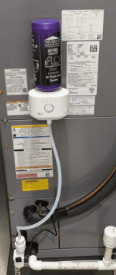
Automated drain line systems work around the clock without your intervention. A small dispenser connects to your drain line and releases a measured amount of cleaning solution at regular intervals, typically daily or every few days. The solution flows through your drain line continuously, preventing the biological buildup that causes clogs.
The iFLO automated drain line system uses a science-backed, non-corrosive solution with active enzymes that target the root cause of clogs. Rather than waiting for a problem to develop, the system maintains a clean drain line throughout your cooling season.
The mechanism is straightforward: the dispenser sits on or near your drain pan and releases small, consistent doses of cleaning solution into the drain line. This proactive approach prevents zoogloea and organic matter from accumulating in the first place. You don't need to mix solutions, access the pipe, or schedule maintenance calls.

What to do next: Compare your current manual maintenance schedule with the frequency of automatic dispensing. If you're maintaining your drain line less than once a month, automated cleaning likely offers measurable time savings.
Comparing Manual vs. Automated Maintenance Costs
The upfront cost difference between methods is small, but long-term expenses diverge significantly.
Manual maintenance costs:
- DIY bleach solution: $5 to $15 per application, requires your time and effort every 2 to 3 months (roughly $20 to $60 per year).
- Professional technician: $150 to $300 per visit, twice yearly during peak season ($300 to $600 per year).
- Emergency clog repair or water damage claim: $500 to $3,000+ (the cost you're trying to avoid).
Automated system costs:
- iFLO Smart Automated AC Drain Line system: $99.99 with a 3-month cartridge or 6-month cartridge option. Cartridge refills cost approximately $30 to $50 per year.
- Zero technician visits required once installed.
- Preventive protection eliminates the risk of costly emergency repairs.
For homeowners in warm climates who rely on air conditioning year-round, a 6-month cartridge system ($99.99 annually, plus occasional refills) delivers ongoing protection for a fraction of what emergency repairs cost. You avoid the inconvenience of scheduling technicians and the anxiety of water damage risk.
The financial case becomes clearer over three to five years. Automated systems pay for themselves through prevention alone.
What to do next: Request quotes from local HVAC technicians for twice-yearly drain line cleaning in your area. Compare that annual cost to automated system pricing.
Installation and Setup: Time and Complexity
Manual drain line cleaning demands hands-on work. You need to locate the drain line, safely disconnect it without damaging fittings, apply your chosen cleaning method, and reconnect everything. Mistakes like cross-threading a connection or applying too much pressure can damage your system.
Automated systems are designed for fast, tool-free installation. The iFLO system installs in approximately 15 minutes with no special tools or HVAC knowledge required. The dispenser attaches to your drain pan or line, you fill the cartridge, and the system begins protecting your drain line immediately.
Installation steps are minimal:
- Locate your air handler and drain pan.
- Attach the dispenser to the drain line or pan (adhesive or bracket, depending on model).
- Insert the cleaning solution cartridge.
- Connect the app for monitoring (optional but recommended).
No plumbing experience needed. No risk of cross-threading pipes or applying incorrect solutions. If you can follow a 10-step instruction guide, you can install an automated system yourself.
What to do next: Review your air handler location and drain line setup before deciding. If your drain line is difficult to access, automated dispensing becomes even more attractive.

Smart Monitoring and Alert Benefits
Modern automated systems pair hardware with mobile app control. The iFLO app shows you real-time data: when the system dispensed solution, remaining cartridge life, and system status at a glance.
Alerts notify you when the cartridge is running low, so you never find yourself without protection. Some systems flag unusual activity patterns, which can signal a developing clog or other drainage issue before it becomes a problem.
For busy homeowners, app monitoring delivers peace of mind without effort. You check the app occasionally to confirm your system is running. If something seems off, you receive an alert. No guesswork, no surprises.
The data also helps you understand your home's specific drainage patterns. Over time, you learn whether your drain line typically needs refills every four months or six, and you can adjust cartridge sizes accordingly.
What to do next: Check whether your current HVAC system has any smart monitoring capability. If not, pairing an automated drain cleaner with app alerts fills a major gap in your maintenance visibility.
Water Damage Prevention with Automated Systems
Water damage from AC drain line clogs creates cascading costs. Standing water inside your air handler promotes mold growth on the evaporator coil, reducing cooling efficiency and spreading mold spores through your home. Water pooling around the indoor unit can seep into walls, flooring, and nearby storage areas, causing rot and requiring remediation.
Insurance claims for water damage often involve deductibles (typically $500 to $1,000), and some policies exclude damage from neglected maintenance. A clogged drain line that you should have maintained may not be covered, leaving you to pay the full repair cost.
Automated systems help reduce the likelihood of these scenarios by maintaining a continuously clean drain line. Clogs can't form if the line is flushed daily. Mold and algae can't thrive in a hostile chemical environment. Water flows freely, preventing backups.
The prevention logic is simple but powerful: a $99.99 annual system prevents thousands of dollars in damage and the stress of dealing with water mitigation contractors, mold removal, and insurance disputes.
What to do next: Verify whether your homeowner's insurance covers water damage from a clogged AC drain line. Call your agent or review your policy to understand your coverage and any maintenance requirements.
Maintenance Frequency and Long-Term Reliability
Automated systems operate on a set schedule, typically dispensing cleaning solution every 24 to 72 hours, depending on your model. This frequency is calibrated to prevent buildup without waste.
Over months and years, this consistent routine creates a drain line environment hostile to clog formation. You don't experience the boom-and-bust cycle of manual maintenance, where you neglect the drain line for three months and then scramble to unclog it.
Reliability increases when maintenance is consistent. Your system becomes predictable: cartridge lasts six months, alarm alerts you to refill, you install a new one, and protection resumes. No missed appointments, no forgotten tasks, no emergency calls.
Cartridge refills are inexpensive and widely available. You keep a spare on hand or order ahead based on your app notifications. Your drain line maintenance becomes as routine as replacing an HVAC filter.
What to do next: Calculate your annual refill costs for your climate. Homeowners in very humid areas may refill more often; those in drier regions may stretch cartridges longer.
Selecting the Right Solution for Your Home
Your choice depends on your priorities, climate, and willingness to maintain your system manually.
Choose manual maintenance if:
- You live in a moderate climate with lower humidity and infrequent A/C use.
- You're comfortable accessing your air handler and performing basic maintenance tasks.
- You have a good memory and can stick to a seasonal cleaning schedule.
- Budget is your primary constraint (though lifetime costs may still favor automation).
Choose automated systems if:
- You live in a warm, humid climate where A/C runs year-round or seasonally.
- You value convenience and want to eliminate maintenance tasks.
- You've experienced a clogged drain line before and want to prevent recurrence.
- You prefer predictable, low-cost protection over occasional large expenses.
- You want app-based monitoring and alerts for peace of mind.
Most homeowners benefit from automation. The combination of low installation cost, minimal upkeep, and substantial preventive protection makes automated drain cleaning a practical upgrade.
What to do next: Check your past HVAC maintenance records. If you've had a clogged drain line or water damage claim, automation is the clear choice.
Making the Upgrade Decision: Key Factors to Consider
Start with your drain line history. Have you experienced clogs, water stains, or musty odors near your air handler? If yes, automated maintenance directly addresses the root problem and prevents future occurrences.
Next, consider your cooling season. Year-round A/C users in warm climates benefit most from continuous protection. Homeowners who cool seasonally still gain protection during the months when humidity risk is highest.
Evaluate installation ease and convenience. If accessing your drain line requires removing cover panels or contacting a technician, automated systems free you from that complexity entirely.
Review costs realistically. A $99.99 upfront investment plus $30 to $50 annually in cartridge refills is substantially cheaper than professional maintenance visits or emergency repair bills. Over five years, the savings and stress reduction compound.
Finally, check your app comfort level. Modern automated systems are straightforward, but if you prefer hands-off maintenance with zero monitoring, confirm the system works reliably without app interaction (most do).
Most homeowners discover that automated drain line maintenance eliminates a persistent source of anxiety. You stop worrying about forgotten seasonal tasks and unexpected water damage. Your system works silently in the background, protecting your home and your investment.
Your next step: Review the iFLO Smart Automated AC Drain Line Cleaning System to see if a 3-month or 6-month cartridge fits your needs. Installation takes 15 minutes, and protection begins immediately.


