

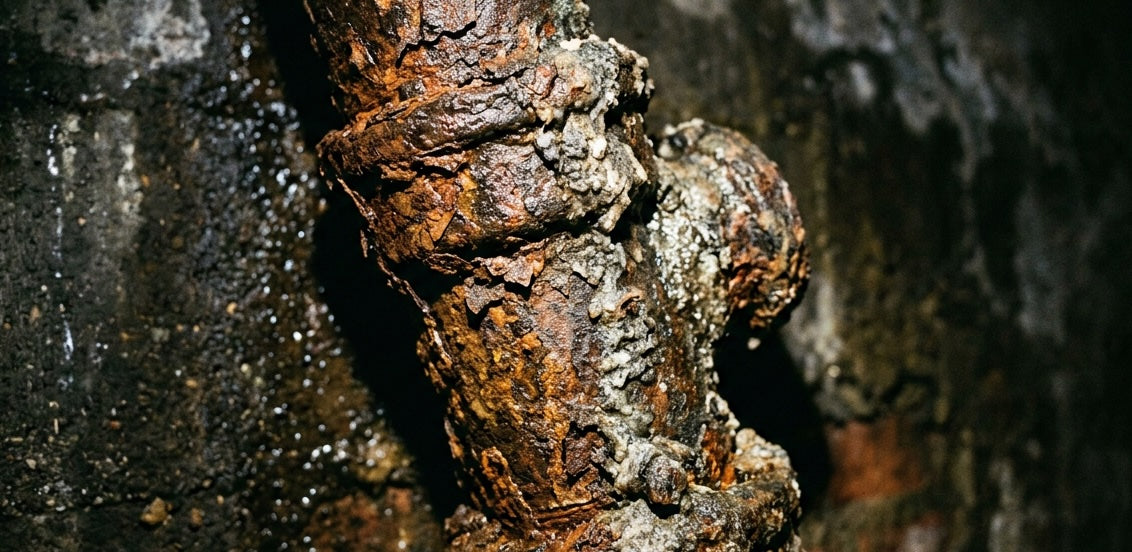
The safest drain cleaner is a non-corrosive one. Many popular drain cleaners use lye (sodium hydroxide), sulfuric acid or bleach. They clear clogs with heat and corrosion, and that same reaction can soften PVC joints, thin metal pipes and kill the bacteria a septic tank needs.
A non-corrosive drain cleaner clears the clog without attacking your plumbing, so you can use it again and again. iFLO® Drain products are non-corrosive and made for PVC, metal pipes and residential septic systems when used as directed.
Why this matters before Thanksgiving
The day after Thanksgiving is called "Brown Friday" in the plumbing world. Roto-Rooter reports service calls jump about 50% over a normal Friday, with roughly 21% more calls across the four-day holiday weekend (Roto-Rooter).
Most of those clogs were already forming before guests arrived. Turkey grease, potato peels and extra showers push a slow drain over the edge. That is when people grab the strongest bottle under the sink, and when pipe damage is most likely.
Is drain cleaner bad for your pipes?
It depends on what is in the bottle. Harsh chemical cleaners work through an exothermic (heat-producing) reaction. On a slow drain, the cleaner flows through. On a fully blocked drain, that hot chemical has nowhere to go, so it sits against the pipe wall and the joints.
Plumbers agree on the pattern: one use may not hurt, but damage builds with every pour. Benjamin Franklin Plumbing notes that prolonged heat can soften PVC and ABS joints, and that the chemicals speed up corrosion inside older cast iron.
How corrosive drain cleaners damage each type of pipe
| Pipe type | Common in | What harsh cleaners do | Warning signs |
|---|---|---|---|
| PVC / ABS plastic | Most homes built after the 1980s | Heat softens or warps pipe walls and loosens glued joints. PVC is rated to 140°F max. | Leaks at joints, slow drips under sinks |
| Cast iron | Homes built before about 1980 | Speeds up internal corrosion, thinning the pipe from the inside | Rust stains, recurring clogs, sewer smell |
| Galvanized steel | Older homes | Strips the protective coating, speeding up rust and pinhole leaks | Low flow, discolored water |
| Copper | Supply lines, some drains | Lye and bleach can thin pipe walls over time | Green staining, pinhole leaks |
| Septic system | Rural and suburban homes | Kills the beneficial bacteria that break down waste | Odors, slow drains, backups |
Sources: Westlake Pipe (PVC temperature rating), Superior Service, Angi
Signs your pipes may already be corroding
Corrosion works from the inside, so the first signs are easy to miss. Watch for:
-
Clogs that keep coming back. Rough, corroded pipe walls catch grease and hair faster.
-
Rust-colored stains or discolored water around fixtures or under sinks.
-
Musty or sewer smells from drains, a sign of buildup or small leaks.
-
Damp cabinet floors or warped baseboards near sinks and tubs.
-
Gurgling drains or slow flow in more than one fixture.
If you see more than one of these, stop using harsh cleaners and have a plumber inspect the lines.
What happens when pipes fail
Corroded or weakened pipes rarely fail politely. They leak inside walls, under cabinets or under the slab. According to Insurance Information Institute data, the average water damage and freezing claim was $13,954 between 2018 and 2022 (Insurify, citing Triple-I).
If the damage is widespread, a whole-house repipe can run about $4,500 to $15,000 in 2026 (ThePricer). Compared with that, choosing a pipe-safe drain cleaner is cheap insurance.
Why "safe for occasional use" isn't good enough
Many harsh cleaners are technically safe for PVC in normal, occasional use. The problem is real life: a kitchen sink that slows down every few weeks, a shower drain full of hair, a holiday weekend of grease. Every repeat pour adds more heat and more corrosion, often with no warning until there is a leak.
If you have recurring clogs, an older home or a septic tank, you need a product you can use regularly without worrying about the plumbing.
Corrosive cleaners are a safety risk, too
Pipe damage isn't the only cost. Most harsh drain cleaners contain sulfuric acid, lye or bleach, ingredients that can permanently burn eyes and skin (Pumper). If the clog doesn't clear, that caustic water stays in the sink, waiting for someone to plunge it or call a plumber.
Never mix two drain products in the same drain, and never follow a harsh cleaner with a plunger. In homes with kids and pets, a non-corrosive formula takes that risk off the shelf.
Corrosive vs. non-corrosive drain cleaners
| Cleaner type | How it works | Speed | Pipe safety | Septic safe | OK for repeat use |
|---|---|---|---|---|---|
| Caustic (lye / sodium hydroxide) | Heat breaks down grease | Fast | Risky, especially on old or blocked pipes | No | No |
| Acid (sulfuric / hydrochloric) | Aggressive dissolving, high heat | Very fast | High risk; often pro-only | No | No |
| Oxidizing (bleach, peroxide) | Oxidizes organic matter | Moderate | Can corrode metal over time | No | Limited |
| Slow eco / enzyme-only | Digests organic buildup | Hours to overnight | Safe | Yes | Yes |
| iFLO® Drain (non-corrosive) | Professional-strength, non-corrosive formula | 15 minutes to 1 hour | Made for PVC and metal pipes | Yes (residential, as directed) | Yes |
How to tell if a drain product is truly non-corrosive
-
Read the label claim. Look for "non-corrosive" and named pipe types (PVC, metal), not just "safe for pipes."
-
Check the Safety Data Sheet (SDS). Sodium hydroxide, potassium hydroxide, sulfuric acid or sodium hypochlorite as main ingredients signal a corrosive product.
-
Watch for heat warnings. "May generate heat" or "do not use in toilets" means the reaction itself is the risk.
-
Confirm septic safety. If it kills septic bacteria, it is aggressive.
-
Look for repeat-use guidance. A pipe-safe product doesn't need a "use sparingly" disclaimer.
iFLO® Drain: fast results without the corrosive risk
iFLO® Drain products are built to work as fast as a lye cleaner without the dangers. Both are made in the USA and available at iFLO.com, Home Depot and Amazon.
iFLO® Drain 15-Minute Clog Buster Gel
For severe clogs in sinks, showers, tubs and toilets.
-
Ultra-thick gel sinks through standing water and clings to pipe walls
-
Non-corrosive, with no harsh chemicals
-
Safe for PVC, metal pipes and residential septic systems when used as directed
-
How to use: pour, wait 15 minutes or less, flush with hot water
iFLO® Drain 1-Hour Drain Clog Buster, Professional Strength
For slow and clogged sinks, showers and tubs.
-
Corrosion inhibitors protect PVC and metal pipes
-
Safe for residential plumbing and septic systems
-
Dissolves hair, grease, soap scum, biofilm and toilet paper, and deodorizes
-
Speed: often works in under 20 minutes; bulk sizes cover whole-home maintenance
Which iFLO® Drain product should I use?
-
Drain is slow but still draining: 1-Hour Drain Clog Buster.
-
Drain is fully stopped, or it's a toilet: 15-Minute Clog Buster Gel. The heavy gel sinks through standing water.
-
Recurring buildup in several drains: a bulk size of the 1-Hour Clog Buster for whole-home maintenance.
Have an A/C drain line too? See Corrosive vs Non-Corrosive AC Drain Cleaners: Which Protects Your Pipes.
Prep your drains before Thanksgiving guests arrive
-
Treat slow drains now, before the holiday load turns them into full clogs.
-
Never pour turkey grease or drippings down the sink. Wipe pans with a paper towel and throw it away.
-
Keep potato peels, celery and poultry skin out of the garbage disposal.
-
Space out showers and laundry so drains can keep up.
-
Keep a non-corrosive clog buster on hand so nobody reaches for the harsh stuff.
When to call a plumber instead
A drain cleaner handles hair, grease, soap scum and food buildup. Call a plumber if:
-
Several fixtures back up at once, which points to a main sewer line clog
-
Water comes up in a tub or floor drain when you flush or run the washer
-
A clog returns within days of treatment
-
You see leaks, stains or soft spots near drain lines
-
Something solid went down the drain, like a toy, utensil or jewelry
Frequently asked questions
Is drain cleaner bad for PVC pipes?
Harsh lye- or acid-based cleaners create heat, and PVC is only rated to 140°F. Repeated use, especially on a fully blocked drain, can soften pipe walls and loosen joints. A non-corrosive cleaner avoids that risk.
What drain cleaner is safe for old pipes?
Older cast iron, galvanized and copper pipes are already thinning. Use a non-corrosive formula that names metal pipes on the label, like iFLO® Drain, and avoid lye, acid and bleach-based cleaners.
Can I use drain cleaner regularly?
Only if it's non-corrosive. Corrosive cleaners do cumulative damage with each use. Non-corrosive products are designed for repeat treatments without harming plumbing.
Are chemical drain cleaners safe for septic systems?
Most are not. Lye, acids and bleach kill the bacteria that break down waste in the tank. Choose a product labeled septic safe, and for ongoing tank care see the iFLO® Automatic Septic Maintenance System.
What does non-corrosive mean for a drain cleaner?
It means the formula won't chemically eat away at pipe materials, seals or joints. It clears the clog without attacking the plumbing around it.
Do non-corrosive drain cleaners work as well as lye?
Older eco and enzyme-only cleaners are gentle but slow, often needing hours or an overnight soak. Newer non-corrosive formulas like iFLO® Drain are made to work as fast as lye-based cleaners, in 15 minutes to an hour, without the heat and corrosion.
How long does a non-corrosive drain cleaner take to work?
It depends on the formula. The iFLO® 15-Minute Clog Buster Gel works in 15 minutes or less. The 1-Hour Drain Clog Buster often works in under 20 minutes and clears most clogs within an hour. Flush with hot water afterward.
Is it safe to use drain cleaner in a toilet?
Many harsh cleaners warn against it because the heat can crack porcelain. The iFLO® 15-Minute Clog Buster Gel is made for toilets as well as sinks, showers and tubs.
Protect your pipes, not just your drains
A clog is a nuisance. A corroded pipe is a repair bill. Before your next slow drain, or your next houseful of holiday guests, switch to a cleaner that clears the clog and leaves the plumbing alone. Shop iFLO® Drain products.


